[II p. 137] בראשון דסוכה ופ' במה אשה תניא הציץ היה כמין טס של זהב רחב שתי אצבעות מקיף מאזן לאזן וכתוב עליו שני שטין קדש ל' למטה יה' למעלה,
[II p. 137] In the first chapter of Sukkah and in chapter Bammeh Ishah it is taught: "The tzitz was a kind of gold plate, two fingers wide, extending from ear to ear, and on it was written in two lines: 'Holy' [qodesh] and 'to-' [le-] below, and the Name above" [b. Sukkah 5a; b. Shabbat 63b].
ובירושלמי דיומא פרק טרף מוסיף כמלך היושב על קתדרין שלו,
In the Jerusalem Talmud, Yoma, chapter Taraf, it adds: "like a king seated on his cathedra."
אמר ר' אליעזר בר' יוסי אני ראיתיו ברומי וכתוב עליו קדש לה' בשטה אחת.
"Said R. Eliezer son of R. Yose: I saw it in Rome, and written on it was 'Holy to the Lord' in a single line."
גם על דבר הפרוכת תניא בתוספתא דיומא סוף פ"ב ומס' יומא פ' הוציאו לו אמר ר' אליעזר אני ראיתיה ברומי שהיו עליה כמה טפי דמים.
Concerning the parokhet as well it is taught in the Tosefta of Yoma at the end of chapter 2, and in tractate Yoma, chapter Hotzi'u Lo: "Said R. Eliezer: I saw it in Rome, and there were many drops of blood on it" [b. Yoma 57a].
וסוף פרק אחרון דאבות דר' נתן איתא מכתשת אבטינס ושלחן ומנורה ופרוכת עדין מונחין ברומי עד כאן דבריהם ז"ל,
And at the end of the last chapter of Avot de-Rabbi Natan it says: "The mortar of Avtinas, the table, the menorah and the parokhet are still lying in Rome." Thus far their words, of blessed memory.
אשר מהם התברר כי מחמדינו הטובים כלי קדש הנזכרים נשמרו ברומי ובפרט עד עת ר' אליעזר הנזכר,
From these it is established that our precious treasures, the holy vessels mentioned, were preserved in Rome, and in particular down to the time of the said R. Eliezer,
אשר כנראה מהקדמת זרעי' לרמב"ם היה שנים רבות אחר [II p. 138] החרבן,
[II p. 138] who, as appears from Maimonides' introduction to [the order] Zera'im, lived many years after the Destruction;
ונזדמן לראותם לסבה אשר זכר רש"י ז"ל במסכת מעילה גבי בן תמליון,
and he happened to see them for the reason mentioned by Rashi of blessed memory in tractate Me'ilah in connection with Ben Temalion [b. Me'ilah 17b].
ויהי כי שערתי בנפשי אולי איזה מחכמי הנוצרים אשר ראו אותם שם מאז או אחרי כן,
Now since I conjectured to myself that perhaps one of the Christian scholars who saw them there, at that time or later,
לכל סבה שתהיה כתב בספר זכרון לפניו דבר מתיחס לתמונתם אשר אותה עתה אנחנו מבקשים,
for whatever reason, had recorded in a book of memorial something bearing on their form, which is what we are now seeking,
באופן כי ממנו נקח איזו הערה (אם לא עדות קיימת) בינותי בספרים אשר אצלם,
so that from it we might take some hint (if not firm testimony), I searched among the books they have,
ועם כי לא מצאתי דברים רשומים וספונים להעתיקם בארוכה כאשר עשיתי בשלשה אלה בני נוח דלעילא,
And although I did not find matters recorded and treasured up such as would merit copying at length, as I did with those three "sons of Noah" above,
לא היה מדרשם בלא חדוש וריש מלין כתבתיו והשבותו אל לבבך.
their study was not without novelty, and I have written down the heads of their words; take them to heart.
גדולי מפרשיהם הסכימו שהפתיל האמור בציץ לא היה חוט משזר אבל כובע או חתולה,
The greatest of their commentators agreed that the petil mentioned with the tzitz was not a twisted cord but a cap or band,
וטס הזהב המגיע מאזן לאזן נתון עליו מצד המצח,
and the gold plate reaching from ear to ear was set upon it at the forehead.
וכבר ראית מה שכתבתי על מלת פתיל בפ' המ"ו,
You have already seen what I wrote on the word petil in chapter 46,
גם בפ' המ"ח ראית היות היוסיפון מפרש וירכסו בפתיל במשיחה.
and in chapter 48 you saw that Josephus interprets "they bound [the breastpiece] with a petil" as "with a cord."⚠1
והאפוד אמרו שהיה כדמות שריון המכסה את הגוף פנים ואחור מן הכתפים עד הטבור או קרוב לו וחגור באזור שהוא החשב.
The ephod, they said, was like a cuirass covering the body front and back from the shoulders to the navel or near it, and girded with a belt, which is the ḥeshev.
ואולם באורים ותומים זכרו דעות מפרשינו ודעת קצת חכמי יהודים שאבני החושן עצמם הם שנקראו אורים על שם האור הזורח מהן,
As for the Urim and Tummim, they cited the opinions of our commentators, and the opinion of some Jewish scholars that it was the stones of the breastpiece themselves that were called Urim, on account of the light [or] shining from them,
ובאגרת אשר כתב המעתיק אצלם על אודות בגדי הכהונה לפאוולה שהיא בין יתר אגרותיו בחבורים שלו חלק ג' כתב על המצנפת וז"ל:
In the letter that their Translator [Jerome] wrote to Fabiola on the priestly vestments, which is among his other letters in his works, part 3, he wrote of the mitznefet as follows:⚠2
התכשיט הרביעי שהיו כל הכהנים נושאים הוא כובע כדורי כתבנית אותו המצוייר על ראש אול"יססי היינו קרוב לחצי כדור כעין כובע נחושת והעברים יקראוהו מצנפת,
"The fourth ornament worn by all the priests is a round cap, like the one painted on the head of Ulysses, that is, approximately a hemisphere, like a bronze helmet; the Hebrews call it mitznefet.
איננו מחודד בעליונו גם לא היה מכסה כל הראש כי לצד המצח היה מגולה בקצת,
It is not pointed at the top, nor did it cover the whole head, for at the forehead it was somewhat uncovered,
ומצד העורף יעצרוהו במשיחה לבל יפול ממנו עכ"ל.
and at the nape they fasten it with a cord so that it does not fall off." Thus far his words.
ובספר אחר רשום אצלם הנקרא משפט העבודות האלהיות אשר במאמרו השלישי פרק אחרון דבר על תכונת בגדי הכהונה שלנו,
And in another book well known among them, called Rationale divinorum officiorum, in its third treatise, last chapter, [the author] speaks of the form of our priestly vestments.⚠3
אמר על הציץ שהיה כובע מחודד נקרא פיתא"לו (אין ספק שיצא להם ממלת פתיל) אשר סביבות שוליו היה נזר זהב עם פרחי רמונים,
He said of the tzitz that it was a pointed cap called pitalo (no doubt derived by them from the word petil), around whose rim was a gold crown with pomegranate flowers,
אפס מצד פניו היה לו טס זהב כחצי ירח ושם בן ד' אותיות מפותח עליה,
but at the front it had a gold plate like a half-moon with the four-letter Name engraved on it.
ועל כן על כל דברי החכמים שזכרנו [II p. 139] אשר לא מבני ישראל היו או שהיו מהם אך אינם בכתובים אצל רבותינו,
[II p. 139] Therefore, regarding all the words of the scholars we have cited, who were either not of the children of Israel, or were of them but are not among the writings accepted by our rabbis,
ובפרט מן השלשה הראשונים המעידים על פי הראיה;
and in particular the first three, who testify from sight:
לך קורא משכיל אמר לבי שהמקומות אשר נמצאו לחכמים ז"ל על בגדי קדש אלה דברים ברורים,
to you, intelligent reader, my heart says that where statements of the Sages of blessed memory are found concerning these holy vestments as clear matters,
הן שראו אותם והעידו עליהם הן שידברו בקבלה,
whether because they saw them and testified about them or because they speak by tradition,
אין ספק כי דברי כל זולתם הבל ורעות רוח.
there is no doubt that the words of all others are vanity and a striving after wind.
אך בנמצא למפרשינו האחרונים דרך פלילה וסברא הן בהבנת הכתובים הן בהבנת דברי רבותינו,
But where our later commentators proceed by way of judgment and reasoning, both in understanding Scripture and in understanding the words of our rabbis,
נראה בעיני שיש לחוש ג"כ לדבר המגידים הנזכרים כל עוד שהכתובים ומאמרי הגמרא יסבלוהו,
it seems to me that one should also take account of the words of the said reporters, so long as the verses and the statements of the Gemara can bear them;
דמיון זה רדת האפוד כפלילת רש"י וסמ"ג מאחוריו עד הרגלים וכן היות הציץ קשור בשלשה פתילים על הדרך שזכרו שניהם,
An example: the ephod descending behind down to the feet, as Rashi and the Semag judged, and likewise the tzitz tied with three cords in the manner both of them described —
מוכרח אני לומר כי לכל מראה עיני איש מדיני לא תאר לו ולא הדר הראוי לעבד האלהים וראש אומתנו.
I am compelled to say that to the eyes of any civilized man it has neither form nor majesty befitting the servant of God and the head of our nation.
הלא עם היות מן הנודע שאם תבואנו מצותו היקרה מפורשת לשים הכ"ג על ראשו סנדל מסומר ומעל למדיו בלויי הסחבות יהיו לו לצבי ולכבוד לגאון ולתפארת,
Now although it is well known that, were His precious commandment to come to us explicitly for the High Priest to place a hobnailed sandal on his head and worn-out rags over his garments, these would be for him beauty and glory, majesty and splendor,
אין ספק גם כן שבהיותנו יכולין לפרש מה שרוח המקום נוחה הימנו באופן שגם רוח הבריות תנוח הימנו דבר רתוי הוא לעשותו והשכל הנטוע בנו מחסדיו יחייבהו.
there is also no doubt that when we are able to interpret what is pleasing to the spirit of the Omnipresent in a way that is also pleasing to the spirit of men, it is fitting to do so, and the reason implanted in us by His kindness requires it.
ואני תמה על הרמב"ן ז"ל איך בפרשת תצוה סביר וקביל שהפתיל האמור בציץ הוא חוט בלבד כי אמר וז"ל:
I wonder at Nahmanides of blessed memory, how in parashat Tetzaveh he held and accepted that the petil mentioned with the tzitz is merely a thread, for he said as follows:
הכלל הוא שאין ענין הכתובים אלא שיכניסו הפתיל בנקבי הציץ,
"The rule is that the meaning of the verses is only that they insert the petil into the holes of the tzitz."
ולפי מה שפרש פתילך דיהודה היה נוח לו להמשך אל מאמרם ז"ל כפה של צמר היתה וכו' ולצייר תמונתו נהוגה ונהדרת,
Yet according to his interpretation of Judah's "your petil" [Gen 38:18], it would have been easy for him to follow their statement, of blessed memory, "it was a woolen cap" etc., and to depict its form as customary and handsome,
ובסמוך על התרגום שושיפא כתב וז"ל: הוא סודר קטן יעטפו בו הראש והנכבדים יפרשו אותו על המגבעות והפארים אשר על ראשם,
And shortly after, on the Targum's shoshifa, he wrote as follows: "It is a small kerchief with which they wrap the head, and the notables spread it over the caps and turbans on their heads,
וזה המנהג עודנו היום בארצות המזרח עכ"ד. ובכן הישר בעיני על אודות הציץ והפתיל האמור בו הוא שנשים לנו ליסוד את מאמר רבותינו כפה של צמר היתה מונחת על ראש כ"ג ועליה ציץ נתון לקיים ונתת אותו על פתיל תכלת,
and this custom is still current today in the lands of the East." Thus far his words. Accordingly, what seems right to me concerning the tzitz and the petil mentioned with it is that we take as our foundation the statement of our rabbis: "A woolen cap was placed on the High Priest's head, and upon it the tzitz was set, to fulfil 'and you shall place it on a blue petil'" [Exod 28:37],
ונאמין שהפתיל האמור בתורה הוא הכפה הזאת כמו שכתבנו למעלה.
and believe that the petil mentioned in the Torah is this cap, as we wrote above.
ועליך לבחור פרוש הרב אלפסי אשר הוא השני לבעל הערוך שמלת כפה תורה היקף שלם רחב שתי אצבעות מגולה בעליונו,
You should choose the interpretation of R. Alfasi, which is the second one given by the author of the Arukh, that the word kippah denotes a complete band, two fingers wide, open at the top;
ולזה יאות לתכשיט הזה תאר נזר הקדש, וכן יאות לו תאר עטרה,
therefore the title "holy crown" [nezer ha-qodesh] suits this ornament, and likewise the title "crown" [atarah],
באמרו הסר המצנפת והרם העטרה כמו שפרש בו החכם דון יצחק,
in His saying "Remove the mitznefet and lift off the atarah" [Ezek 21:31], as the sage Don Isaac [Abravanel] explained it;
ומצד המצח היה טס הזהב דבוק עליו באופן מה כפי האומנות.
and at the forehead the gold plate was attached to it in some manner, according to the craft.
ואחרי שהערוך והאלפסי הנזכר שניהם מסכימים על היות הכפה הזאת ארוגה בפתילים באיזו מלאכה,
And since the Arukh and the said Alfasi both agree that this cap was woven of cords by some craft,
לא נמאן את דברי היוסיפון שכתב היות שתי התכשיט הזה שלשה נימין או תאמר נירין אחד מזה ואחד מזה ואחד באמצע ושהיו הפרחים ההם מצויירים בו,
we shall not reject the words of Josephus, who wrote that the warp of this ornament was three strands — or say rows of weave — one on each side and one in the middle, and that those flowers were depicted on it;
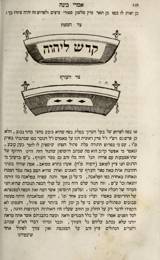
אשר על [II p. 140] כן יאות לו כמו כן תאר ציץ מלשון פטורי ציצים ולפרוש זה יהיה ציורו כך:
[II p. 140] hence the title tzitz also suits it, from the expression "open flowers" [petturei tzitzim, 1 Kgs 6:18]. According to this interpretation its depiction will be thus: 
צד המצח קדש ליהוה צד העורף או נטה לפרוש של בעל הערוך במלת כפה שהיא כובע כחצי כדור נבוב,
[the side of] the forehead: "Holy to the Lord"; the side of the nape. [diagram] Or one may lean toward the interpretation of the author of the Arukh of the word kippah, that it is a cap like a hollow hemisphere.⚠4
הלא כן פרש גם רש"י ז"ל פרק ראשית הגז על מאמרם ז"ל הנזכר כמו שכתבתי בפרק ס"ו,
Did not Rashi of blessed memory, in chapter Reshit ha-Gez, also explain their statement thus, as I wrote in chapter 66?
עם כי בפרוש התורה מלת פתיל הטתו שיספיק לו לומר כעין כובע,
Though in his commentary on the Torah he inclined [to explain] the word petil [differently], so that it sufficed for him to say "a kind of cap."⚠5
ונאמר כי אפשר קרוב הוא מה שכתב היוסיפון שהנזר הזה היינו ההיקף של שתי אצבעות עם פרחיו הנז' היה כלו זהב גם מצד העורף.
And we shall say that what Josephus wrote is perhaps plausible: that this crown, namely the band of two fingers with its said flowers, was entirely of gold, at the nape as well;
כ"ש בדעתך כי תרגום תנו ציץ למואב (ירמיה מ"ח) אעדו כתרא ממואב.
all the more so to your mind, since the Targum of "Give a tzitz to Moab" (Jeremiah 48[:9]) is "Remove the crown from Moab."
אמת שהיה בשתי חתיכות אחת באה מצד העורף עד האזנים ואחת שהיא הטס באה מצד המצח ונאחזת באחרת כפי המלאכה,
True, it was in two pieces: one coming from the nape to the ears, and one, the plate, coming from the forehead and joined to the other by the craft;
כי על כן אמר והנה עטרה במלאכה כזו היתה יוצאה וכו' ע"ש.
for this reason it says, "and behold, a crown made in such fashion came out," etc.; see there.
ומלשון היוסיפון אשר דמה זאת הכפה למצנפתא של ההדיוטים באמרו ועליו כובע אחר וכו',
And from Josephus' language, which likens this cap to the mitznefet of the ordinary priests, saying "and over it another cap," etc.,
ידמה שמלאכתה היתה מעשה סבובים ונפתולים קיימים כי על כן יכון לה ביותר שם פתיל,
it appears that its workmanship was of permanent windings and twistings, which is why the name petil especially suits it;
וחכמינו לא הקפידו לדבר רק על החלק מן הזהב שעליו היו האותיות הקדושות ההנה,
and our Sages took care to speak only of the gold part on which those holy letters were.
כי לכל הפנים אמרו ית' על כלל הבגדים וראה ועשה כתבניתם אשר אתה מראה יורנו שלא נכתב עליהם כל הצורך,
For at all events His saying, blessed be He, regarding all the vestments, "See and make according to their pattern which you are shown" [Exod 25:40], teaches us that not everything necessary was written about them.
וכבר זכרתי דברי הא"ע שכתב ולשרים הגדולים ציץ זהב על המצנפת ואין צורך לפתיל אחר [II p. 141] שיעמידנו ,
[II p. 141] And I have already mentioned the words of Ibn Ezra, who wrote: "and for great princes a gold tzitz on the turban, and there is no need for another petil to hold it."
ולפרוש הזה יהיה ציורו כך : והנה לפי העולה על צורת ציץ נזר הקדש עם המצנפת רוחי כאשר תשכיל באמתת הדרוש לפי דרכנו,
According to this interpretation its depiction will be thus: [diagram]. Now, according to what emerges regarding the form of the tzitz, the holy crown, with the mitznefet, my spirit [says that] when you grasp the truth of the matter by our approach,⚠6
תמצא שב על נכון אמרו ושמת אותו על פתיל,
you will find that His words "and you shall place it on a petil" [Exod 28:37] fit well,
וישם על המצנפת את ציץ הזהב נזר הקדש,
[and] "he placed upon the mitznefet the gold tzitz, the holy crown" [Lev 8:9],
וכן יתישב אמרם ז"ל כפה היתה מונחת ועליה ציץ נתון,
So too is their statement of blessed memory settled: "a cap was placed, and upon it the tzitz was set,"
כי זו וזה הנחתן הפשוטה בלי קשירה עושה מצוה,
since both of them, by their simple placing without tying, fulfil the commandment.
הלא לדעת המפרשים הנזכרים יקשה איך לא אשתמיט קרא או סתם תלמודא לכתוב בחד דוכתא לשון קשירה וכדומה כאמרו בחשן וירכסו בפתיל וגו'.
Whereas according to the opinion of the said commentators it is difficult why neither Scripture nor the anonymous Talmud ever happened to write, in a single place, a term of tying or the like, as it says of the breastpiece "and they bound it with a petil" etc.
גם ויתנו עליו פתיל תכלת דפרשת פקודי מתישב מאד ובפרט לפרוש השני הנז' במה שיורה התנשא הפתיל היינו הכפה ההיא גבוהה מן הציץ הנתון בשוליה,
Also "and they put on it a blue petil" in parashat Pekudei [Exod 39:31] fits very well, especially according to the second interpretation mentioned, in that it indicates that the petil, namely that cap, rose high above the tzitz set on its rim,
ותכלית הפתיל הנז' הוא לתת על המצנפת מלמעלה,
and the purpose of the said petil is "to set upon the mitznefet from above" [ibid.].
ודבר ישימו צניף טהור על ראשו הרומז בלי ספק לא למצנפת כהן הדיוט אבל למיוחדת בלבד לכהן גדול שהיא כפת התכלת עם הציץ,
And the statement "Let them put a pure turban [tzanif] on his head" [Zech 3:5], which no doubt alludes not to the mitznefet of an ordinary priest but to the one peculiar to the High Priest, namely the blue cap with the tzitz,
שב מאד על נכון ומורה היות הפתיל צניף ששמוהו על ראשו אחרי שכבר הלבישוהו בגדים שהם כל בגדי הכהונה.
fits very well, and indicates that the petil is a turban which they put on his head after they had already clothed him in garments, that is, all the priestly vestments.
ואם יקשה בעיניך כפי הפרוש השני לומר שהזהב היה מקיף גם בצד העורף מאזן לאזן כי תחשוב היות זה שלא כדעת רבותינו,
And if it seems difficult to you, according to the second interpretation, to say that the gold encircled from ear to ear on the nape side as well, since you think this is contrary to the opinion of our rabbis,
תאמר כי מלאכת הפתילים של הכפה הנזכרת היתה נראית בשוליה גם מצד העורף ושהטס (מצד פנים בלבד) היה דבוק עליו מעשה אומן כפי הצורך,
you may say that the cord-work of the said cap was visible at its rim on the nape side too, and that the plate (on the front only) was attached to it by skilled work as needed.
הלא גם לדעת המפרשים הנז' צריך שנדמה העשות נקבים בקצות הטס להכניס בם הפתיל עם שלא התבאר בכתוב,
For even according to the opinion of the said commentators we must imagine that holes were made at the ends of the plate to insert the cord, though this is not stated in Scripture.
והנה אין ספק כי אמרם ז"ל [II p. 142] שערו היה נראה בין ציץ למצנפת ששם מניח תפילין יתישב בהחלט לפרוש הראשון ויקשה אל השני,
[II p. 142] Now there is no doubt that their statement of blessed memory, "his hair was visible between the tzitz and the mitznefet, where he would place the tefillin," fits perfectly with the first interpretation and is difficult for the second.
אך איננו מן הנמנע שנאמר כי רצונם בו שעם היות מדרך הכובע לכסות גם שפוע הראש לעמת המצח,
But it is not impossible to say that they meant that, although it is the way of a cap to cover also the slope of the head toward the forehead,
הנה כפלו את הכפה הזאת מעט לתוכה באופן שיראה שערו לקיום מצות התפלין,
they folded this cap inward a little so that his hair would be visible, for the fulfilment of the commandment of tefillin.
וכן ראיתי תרגום יונתן ב"ע על הכתוב ושמת אותו על פתיל תכלת ויהא על מצנפתא מעלוי תפלת רישא וגו'.
And so I saw in Targum Jonathan ben Uzziel on the verse "and you shall place it on a blue petil": "and it shall be on the mitznefet above the head-tefillin," etc.
ואם נפשך לומר כי גם שני הפתילים הכפולים שכתבו רש"י וסמ"ג בשתי קצות הטס עם הפתיל העובר על הקדקד,
And if you wish to say that also the two doubled cords which Rashi and the Semag wrote of at the two ends of the plate, with the cord passing over the crown of the head,
לא כונו היותם פתילים גרידא אבל שהיו מגודלים יחדו במלאכה מה ושלזה תארם רש"י ז"ל כמין כובע,
were not meant to be mere cords but braided together by some craft, and that therefore Rashi of blessed memory described them as "a kind of cap" —
הנה אנכי עמך וברכתיך, כי בלאו הכי החוט המשולש שזכרו רש"י וסמ"ג מאמצע המצח לעורף הלא ינתק מכל פרוש אשר זכרנו.
"behold, I am with you and will bless you"; for in any case the triple cord which Rashi and the Semag mentioned, from mid-forehead to the nape, is quickly snapped [cf. Eccl 4:12] by every interpretation we have mentioned.
והנה על דמות פרחי הרמונים שאמר היוסיפון היותם מצויירים בנזר הנזכר,
As for the likeness of pomegranate flowers which Josephus said were depicted on the said crown,
הן שהיה תכלת כפרוש כפה הראשון הן שהיה זהב לפי הפרוש השני,
whether it was blue, according to the first interpretation of kippah, or gold, according to the second,
כבר ידעת כי גם בשולי המעיל היו לו דמות רמונים שלמים,
you already know that at the hem of the robe too there were likenesses of whole pomegranates;
ומי יודע אם ירמזו לשלשת הכתרים הידועים לנו ביומא פרק בא לו תורה כהונה ומלכות או לתורה נביאים וכתובים,
And who knows whether they allude to the three crowns known to us from Yoma, chapter Ba Lo — Torah, priesthood and kingship — or to Torah, Prophets and Writings,
או אם ייטב בעיני המקובלים ליחסם לשלשת הספירות המעולות אשר אנכי לא ידעתי.
or whether it would please the kabbalists to relate them to the three supreme sefirot — which I do not know.
ואעפ"י שאין זה אשר אומר ראיה גמורה זכר יש בה,
And although what I shall say is not a complete proof, there is a hint of it:
והוא כי המיטרה הנהוגה לכ"ג הנוצרים אשר היא בעלת שלשה סדרים ממולאים בפרחים של אבנים טובות בין סדר לסדר,
namely, that the mitre customarily worn by the high priest of the Christians, which has three tiers filled with flowers of precious stones between tier and tier,
אפשר שנעשתה לקצת דמיון הציץ נזר הקדש. הלא כתב בעל ספר משפט עבודתם בפרקו הנזכר כי יש לקצת הבגדים הנהוגים להם קצת דמיון לבגדי הכהן גדול שהיה לנו,
was perhaps made in some likeness of the tzitz, the holy crown. Indeed, the author of the Rationale divinorum officiorum wrote in his said chapter that some of their customary vestments have some likeness to the vestments of the High Priest we once had.
ואולי לא גמרו אומר שתהיה כמוהו בהחלט מן הטעם הנמצא לקצת חכמיהם בענין פסחם.
And perhaps they did not resolve to make it entirely like it, for the reason found among some of their scholars in the matter of their Passover.
כי תראה לפלאטינה הסופר פרק ויטורי אפפיור ט"ו שעם היות מן הישר בעיני רבים ונכבדים אצלם לעשותו י"ד בניסן כמונו,
For you will see in the writer Platina, chapter on Pope Victor, the fifteenth, that although many and esteemed among them held it right to keep it on the 14th of Nisan as we do,⚠7
הנה אחרי ויכוח גדול נמנו וגמרו לדחותו ליום א' שאחריו למען לא יתדמו בנו,
after great debate they voted and resolved to postpone it to the following Sunday, so as not to resemble us;
והלא תראה שהם מתארים כהנם הגדול בקדוש כתאר הכהן הגדול אצלנו,
And do you not see that they title their high priest "Holy," like the title of the High Priest among us,
ממה שכתוב וקדשתו קדוש יהיה לך כי אני ה' מקדשו,
from what is written, "and you shall sanctify him; he shall be holy to you, for I the Lord who sanctify him am holy" [Lev 21:8]?
אשר על כן צוה שיכתב על מצחו קדש לה' שהוא תאר מוסב לא אל הציץ ביחוד כי על כל הבגדים נאמר בגדי קדש הם,
Therefore He commanded that "Holy to the Lord" be written on his forehead, which is a title referring not to the tzitz in particular — for of all the vestments it is said "they are holy garments" [Lev 16:4] —
אבל לעצם הכהן ההוא ברצון אלהינו. גם להיות התכשיט הזה מלבד טס הזהב כפי הפרוש הראשון מעשה גדיל,
but to the person of that priest, by the will of our God. Also, since this ornament, apart from the gold plate, was, according to the first interpretation, braided work,
יאות לו אמרם ז"ל פרק יש נוחלין על בנו של יוסי בן יועזר שלקח לאשה בת גדיל כלילי לינאי מלכא ופרש"י מקלע עטרות,
their statement of blessed memory in chapter Yesh Noḥalin about the son of Yose ben Yo'ezer, who married the daughter of "the braider of King Yannai's crowns," which Rashi explains as "the plaiter of crowns" [b. Bava Batra 133b], suits it;
וכן כלילא שזכרו פ' במה אשה לענין תכשיטי האשה ועטרות כלות של גדיל דסוף סוטה עדות ואות [II p. 143] שהעטרות מעשה גדיל היו נהוגות אצלם,
[II p. 143] and likewise the kelila mentioned in chapter Bammeh Ishah regarding women's ornaments, and the brides' crowns of braided work at the end of Sotah, are evidence and sign that crowns of braided work were customary among them.
ודי בזה לענין הציץ והפתיל כפי כונתנו. — אמנם לענין האפוד אם תתבונן בו דברי כל הספרים החיצונים הנזכרים,
This suffices regarding the tzitz and the petil for our purpose. — As for the ephod, if you consider the words of all the said external books,
יתבאר לך שהם יאמינוהו בלתי יורד מן האזור ולמטה כנראה דעת קצת מפרשינו שזכרנו דלא כרש"י והנלוים אליו,
it will be clear to you that they believe it did not descend below the belt, as appears to be the opinion of some of our commentators whom we mentioned, unlike Rashi and those who follow him;
והנה בעמדנו על דברי כל הסופרים הנזכרים ובפרט היוסיפון שהיה כהן,
Now, when we consider the words of all the said writers, and especially Josephus, who was a priest,
ימצא כמו כן הכרע על אודות מחלוקת מפרשינו ז"ל בתמונת המצנפת כי משפטיהם צדקו יחדו,
a decision will likewise be found regarding the dispute of our commentators of blessed memory on the form of the mitznefet, for their judgments are "righteous altogether" [Ps 19:10]:
היינו שהיתה נפתלת בסבוב כרמב"ן אך תפורה באופן שלא יצטרכו לפתול אותה בכל פעם,
namely, that it was wound around as Nahmanides holds, but sewn so that they would not need to wind it each time,
אבל תדמה כפה ומגבעת ככובע קיימת ועומדת כדברי רש"י ז"ל.
but rather it would resemble a cap and hat, like a fixed, standing cap, as Rashi of blessed memory says.
וכן נמצא מהם הכרע בסדר כתיבת השבטים על כתפות האפוד שהיה כדברי רש"י ז"ל דלא כהרמב"ם,
Likewise a decision is found from them on the order of writing the tribes on the shoulder-pieces of the ephod, that it was as Rashi of blessed memory says, unlike Maimonides;
ושאופן הנתן הפעמונים בתוך הרמונים הוא ג"כ כדברי רש"י דלא כרמב"ן דוק ותשכח.
and that the manner of placing the bells among the pomegranates is also as Rashi says, unlike Nahmanides — examine and you will find.
וגם בדברים אחרים מתיחסים לתמונת בגדי קדש אלה נמצא קצת ברור אם נשית אליהם לבנו.
In other matters relating to the form of these holy vestments too some clarification will be found, if we set our minds to them.
האמנה בדבר האורים ותומים, על מנת שלא יהיו דברי נגד שום אמרת אלוה צרופה בכתב או על פה,
Indeed, concerning the Urim and Tummim — on condition that my words are not against any pure word of God, written or oral,
ואחרי הכנעי לכל דעת יותר צודק אומר כי הנה מאשר לא התישב אצלי היותם כתבי שם המפורש כדעת רש"י מפני הקשיא שעוררתי בפרק המ"ו,
and after submitting myself to any more correct opinion — I say that since I am not satisfied that they were a writing of the Explicit Name, as Rashi holds, because of the difficulty I raised in chapter 46,
ואשר הניעני לזה הוא שנקראו אבני מלואים על היותן ממלאות את החושן,
What moved me to this is that they were called "stones of filling" [millu'im] because they filled the breastpiece;
כי אם מטעם רש"י שהן ממלאות המשבצות הנה גם אבני השוהם עושות כהנה.
for if by Rashi's reason, that they fill the settings, the onyx stones too do the same.
ועוד כי בצווי ובמעשי אבני השוהם לא תמצא רק מלת על כתפות המורה היותן נתונות החוצה,
Further, in the command and in the making of the onyx stones you find only the words "on the shoulder-pieces," which indicate that they were set on the outside,
אך עם אבני החושן נמצא תמיד קשר אות הבי"ת או מלת אל,
but with the stones of the breastpiece there is always the connective letter bet or the word el ["into"];
ראה אמרו ומלאת בו וימלאו בו, ונתת אל החושן ויתן אל החושן,
see its saying "and you shall fill in it" and "they filled in it," "and you shall put into the breastpiece" and "he put into the breastpiece,"
שהוא כמו ואל הארון תתן וגו', ונשא אהרן את שמות וגו' בחושן,
which is like "and into the ark you shall put" etc. [Exod 25:16], and "Aaron shall bear the names etc. in the breastpiece" [Exod 28:29];
ואמרו על לבו הוא לאות על הסתרם כמו תפלין של יד על הלב.
and its saying "on his heart" is a sign of their being hidden, like the hand-tefillin on the heart.
ובפרשת ויקהל שזכר בבאור רחב כמה פרטים בלתי עקריים כאלה,
And in parashat Vayakhel, which mentions in broad detail several such non-essential particulars,
אחרי אמרו וימלאו בו ארבעה טורי אבן לא זכר אורים ותומים,
after saying "and they filled in it four rows of stone" [Exod 39:10] it does not mention Urim and Tummim;
והכפל אשר בפרשת תצוה שעם אמרו בתחלה ומלאת בו וגו' חזר באחרונה וכתב ונתת אל חשן המשפט את האורים וגו',
As for the repetition in parashat Tetzaveh — that after first saying "and you shall fill in it" etc. it returned at the end and wrote "and you shall put into the breastpiece of judgment the Urim" etc. [Exod 28:30] —
סיפא איצטריכא ליה היינו להוסיף והיו על לב אהרן וגו',
the latter clause was needed for it, namely to add "and they shall be on Aaron's heart" etc.;
הלא ידעת כפל טבעות הארון בפרשת תרומה ודברי רש"י עליהם שמה.
you know the repetition of the rings of the ark in parashat Terumah and Rashi's comments on them there.
גם אפשר שהוכפל כדי לבאר שמצות ומלאת בו הנזכרת יש לו לקיים אותה אחרי העשות התכשיט כלו והיותו מושם על הכהן,
It may also have been repeated to make clear that the said command "and you shall fill in it" is to be fulfilled after the whole ornament has been made and placed on the priest,
כנראה בשעת מעשה פרשת צו שאמר וישם עליו וגו' ואח"כ ויתן אל החושן.
as appears at the time of the action in parashat Tzav, which says "and he put on him" etc. and afterwards "and he put into the breastpiece."
הלא היה החושן כפול לדמיון כיס המתמלא עד כי [II p. 144] דרך מליצה נוכל לקרוא עליו פלס ומאזני משפט לה' מעשהו כל אבני כיס .
[II p. 144] For the breastpiece was doubled, like a pouch that is filled, so that by way of figure we may apply to it: "A just balance and scales are the Lord's; all the stones of the pouch are His work" [Prov 16:11].
ומה שהוסיף לי חזוק בדעת הזה היינו שהאורים ותומים הן הם האבנים עצמם,
What further strengthened me in this opinion, namely that the Urim and Tummim are the stones themselves,
הוא ראותי דברי הרמב"ם ז"ל אשר פעמים רבות בקול דממה דקה קול דבריו בקול המון נוטים אליו מאד,
is seeing the words of Maimonides of blessed memory, which many times in "a still small voice" [1 Kgs 19:12] — the sound of his words like the sound of a multitude — incline greatly toward it.
כי בהלכות כלי המקדש פ"ט שהוא מקום למוד כל מלאכת הבגדים כתב וז"ל קובע בו ארבעה טורי אבנים וכו' ומן האורים ותומים לא דבר מאומה,
For in Hilkhot Kelei ha-Mikdash, chapter 9, which is the place for learning all the making of the vestments, he wrote as follows: "He sets in it four rows of stones," etc., and of the Urim and Tummim he said nothing at all;
ופרק העשירי שאינו מקום לדבר על תמונת הבגדים אשר כבר למדנום בתשיעי כתב בבית שני עשו אורים ותומים וכו',
while in the tenth chapter, which is not the place to speak of the form of the vestments, which we already learned in the ninth, he wrote: "In the Second Temple they made Urim and Tummim," etc.
ובהכרח זאת העשיה איננה דבר מחודש על האמור בפר' הקודם אך בא פה להוסיף באור שעשאום להשלים מנין הבגדים אעפ"י שלא היו נשאלים בהמה.
And necessarily this making is nothing new beyond what was said in the previous chapter, but comes here to add the explanation that they made them to complete the number of vestments, although they were not consulted by them. 
וידענו כי התשובה היתה יוצאה מן האבנים ואותיותיהן,
And we know that the answer issued from the stones and their letters.
והיות אבני חפץ אלה נקראות אורים אפשר שהוא לרוב האור הטבעי המזהיר מחבור כלם,
That these precious stones are called Urim is perhaps because of the abundant natural light shining from all of them together,
וג"כ להדר האור האלהי הנשקף מהם בעת הרצון כמו שנזכור לפנינו,
and also because of the splendor of the divine light shining forth from them at the time of favor, as we shall mention below;
ותומים מלשון והנה תומים שהיו שוות בגדלן וערכן וכן השבטים הרשומים עליהן שוים בהדרגה לפני אלהינו,
and Tummim from the expression "and behold, twins [te'omim]" [Gen 25:24], since they were equal in size and value, and likewise the tribes inscribed on them were equal in rank before our God;
ובפרט כדבריהם ז"ל ביומא שמאירין את דבריהם ומתמימים אותם.
and especially according to their words of blessed memory in Yoma, that "they illuminate their words and fulfil them" [b. Yoma 73b].
ומ"מ עקר תוארן נראה היותו אורים בלבד כאמרו ושאל לו במשפט האורים וגו',
In any case their principal title appears to be Urim alone, as it says "and he shall inquire for him by the judgment of the Urim" etc. [Num 27:21].
ואנכי לא ידעתי מה שיתנגד לזה, כי עם אמרנו שהאבנים היו נעלמות בכפלי החושן,
And I do not know what contradicts this; for even if we say that the stones were hidden in the folds of the breastpiece,
הלא בשעת התשובה אפשר להן להיות בולטות ומאירות ומצטרפות כי אפילו מחיצה של ברזל אינה מפסקת,
at the time of the answer they could stand out, shine and combine, for even an iron partition does not separate [cf. b. Pesaḥim 85b],
ובפרט למאי דתנינא בירושלמי פ' בא לו כיצד היו שואלין אית תניי תני הקול היה שומע דכתיב וישמע את הקול וגו',
especially according to what is taught in the Jerusalem Talmud, chapter Ba Lo, "How did they inquire? Some tanna teaches: he would hear the voice, as it is written 'and he heard the voice'" etc.
ולכל הפנים יונח ג"כ שהאבנים לא היו נתונות בתוך כפלי החושן רק עליו כנראה גם מפשט דברי שלשת הסופרים הנזכרים,
And in any case, let it also be granted that the stones were not set inside the folds of the breastpiece but upon it, as also appears from the plain words of the three said writers;
הלא עכ"ז יתכן ליהם תאר אורים ותומים לאבנים עצמן ולאותיות כמו שזכרנו.
even so the title Urim and Tummim can suit the stones themselves and the letters, as we mentioned.
ומה שתמצא בירושלמי דקדושין עד עמוד כהן לאורים וגו' וכי היו אורים ותומים בבית שני אלא כמי שאומר עד יחיו המתים או עד יבוא משיח,
As for what you find in the Jerusalem Talmud of Kiddushin, "'until a priest arises for Urim' etc. — were there then Urim and Tummim in the Second Temple? Rather, it is like one who says 'until the dead revive' or 'until the Messiah comes'" —
לא יתנגד מאומה לדברי הרמב"ם ז"ל ולדברינו כי אחרי שנמנעה תשובתן היו כלא היו,
it does not contradict at all the words of Maimonides of blessed memory or our words, since once their answering ceased, they were as if they were not.
וכן כתבו התוספות סוף פ"ק דיומא וז"ל: אורים ותומים היו בבית שני דאל"כ כהן גדול מחוסר בגדים אלא שלא היו משיבין לנשאלין בהם.
And so the Tosafot wrote at the end of the first chapter of Yoma, as follows: "There were Urim and Tummim in the Second Temple, for otherwise the High Priest would be lacking vestments; only they did not answer those who inquired of them."
עם שתדע כי אחרי ראותנו הבבלי בלתי מתעורר על קשית הירושלמי דלעילא,
Know, however, that since we see the Babylonian [Talmud] does not raise the above difficulty of the Jerusalem Talmud,
יש לנו לומר שלא נתקבלו דבריו אצלו כדבעינן למימר קמן מטעם האלפסי והרא"ש ריש פרק נ"א,
we must say that its words were not accepted by it, as we are going to say below, for the reason of Alfasi and the Rosh, at the beginning of chapter 51;
ושאדרבא מכח הפסוק הנזכר סבירא ליה דגם בבית שני היינו בקצת זמנו מראשיתו היו האורים ותומים משיבין את שואלם דבר כימי קדם,
and that, on the contrary, on the strength of the said verse it held that also in the Second Temple, namely in part of its time from its beginning, the Urim and Tummim answered the one who inquired, as in former days,
כפי מה שנמצא בו גם כן האש מן השמים קצת זמן עד שגרם החטא והיו דברי הקדושה בו [II p. 145] בו הולכים ומתמעטים כמו שיתבאר סמוך לסוף פרק נ"א הנזכר.
[II p. 145] just as the fire from heaven too was found in it for some time, until sin caused, and the elements of holiness in it went on diminishing, as will be explained near the end of the said chapter 51. 
סוף דבר מעולם לא אמרתי אל הקוראים קבלו דעתי רק כרצון איש ואיש מן המשכילים באמת,
In sum, I have never said to the readers, "Accept my opinion," but only as each truly intelligent man wishes;
ובפרט הנני מסכים לדבר הכוזרי מאמר ג' שאם היינו מצווין עתה להקריב קרבנות לא ידענו הבגדים והכונתם וכו'.
and in particular I agree with the words of the Kuzari, treatise 3, that were we commanded now to offer sacrifices, we would not know the vestments and their intention, etc.
והקמחי ז"ל בשרשיו מלת אור כתב וז"ל: אורים ותומים לא נודע אצלנו מה הם,
And Kimḥi of blessed memory, in his [Book of] Roots, under the word or, wrote as follows: "Urim and Tummim — it is not known to us what they are;
רש"י ז"ל אמר שהם כתב שם המפורש אך לא נתברר האמת ע"כ,
Rashi of blessed memory said they are a writing of the Explicit Name, but the truth has not been clarified." Thus far.
ואמרו ית' על כל מלאכת המשכן ככל אשר אני מראה אותך וגו',
And His saying, blessed be He, concerning all the work of the Tabernacle, "according to all that I show you" etc. [Exod 25:9],
הלא יורה כמו שזכרתי שהדבור אשר בכתב איננו מספיק להבנתם אם לא יתלוה אליו ראות העין,
indicates, as I mentioned, that the written word is not sufficient for understanding them unless accompanied by seeing with the eye;
עכ"ז מצוה עלינו לדרוש ולתור ולמיסבר קראי עד מקום שיד השכל מגעת.
nonetheless it is incumbent upon us to inquire and explore and to reason out the verses as far as the hand of reason reaches.
והלא ידעתי כי לא רויתי את נפש הקורא בבגדים כלם וכפי הצורך,
I know that I have not satisfied the reader's soul regarding all the vestments as needed;
אכן ישמח במעט המושג אם השיג מאומה, ולא מעט עשיתי להורות לפניו את כל המקומות של חכמי ישראל וחכמי האומות שזכרתי,
yet let him rejoice in the little attained, if he has attained anything; and I have done no small thing in showing him all the passages of the sages of Israel and of the sages of the nations that I mentioned,
ויהי כי ראיתי ליוסיפון בקדמוניות דברים על אבני האפוד והחושן אשר אם אמת היו אינם רקים מחדוש נאות,
And since I saw in Josephus' Antiquities statements about the stones of the ephod and breastpiece which, if true, are not devoid of fitting novelty,
ישר בעיני להעתיקם בזה והנם חתימת דברינו על בגדי קדש אלה.
I saw fit to copy them here, and let them be the conclusion of our words on these holy vestments.
בספרו השלישי סוף פרק ט' כתב וז"ל: הן עתה אספר מה שזכרונו בתמונת בגדי הכהונה לא היה מן הצורך,
In his third book, at the end of chapter 9, he wrote as follows: "Now I shall relate what my mention of the form of the priestly vestments did not require:
והוא כי הלבוש הזה היה מונע את הכהנים אשר ישאוהו מהכזיב והונות הזולת במשאות שוא ושקר,
namely, that this garment prevented the priests who wore it from lying and deceiving others with vain and false oracles,
כי הנה הוא בעצמו היה נותן לכל רואיו כגר כאזרח אות אמת אם האלהים היה עם הכהן אשר ילבשהו אם אין.
for it itself gave to all who saw it, stranger and native alike, a true sign whether God was with the priest who wore it or not.
וזה כי הימנית משתי אבני השוהם שעל הכתפות אשר טבעם כבר גלוי וידוע היתה שלא כמנהג מרובת הזוהר,
For the right one of the two onyx stones on the shoulder-pieces, whose nature is already known, shone with unusual brilliance,
באופן כי רואיה גם מרחוק יביטו יראו בה,
so that those who beheld it even from afar would look and see it.
וזה דבר שיתפלא עליו כל משכיל אשר היות עבודת האלהים בעיניו לבוז,
This is a thing at which every intelligent person will marvel who, holding the worship of God in contempt,
לא יביאהו לדמות בגללו סברא כוזבת. ואולם יותר נפלא ג"כ היה הדבר הזה שאומר,
will not be brought on its account to form a false opinion. But more wondrous still was the thing I shall now tell,
והוא כי באמצעות שתים עשרה האבנים הקבועות על לב הכהן הגדול בחשן,
namely, that by means of the twelve stones set in the breastpiece on the heart of the High Priest
היה מנהג האלהים להודיע אל בני ישראל בלכתם למלחמה שינצחוה,
God was accustomed to inform the children of Israel, when they went out to war, that they would be victorious;
כי טרם יקרבו אליה חלוצי הצבא היה נשקף מהם זוהר מופלג באופן שעל נקלה יכירו העם כלו איך האלהים עמם ושיהיה קרוב לכל אשר באמת יקראוהו,
for before the armed troops approached it, an extraordinary brilliance shone from them, so that the whole people easily recognized that God was with them and would be near to all who truly call upon Him.
כי בגלל הדבר הזה חכמי יון אשר לא ילעגו על עבדנו את האלהים,
For on account of this the sages of Greece, who do not mock our worship of God,
והנה אותות הזוהר האלה הן מאבני החושן הן מאבני האפוד ספו תמו מקרבנו כמאתים שנה לפני כתבנו הספר הזה,
These signs of brilliance, both from the stones of the breastpiece and from those of the ephod, came to an end among us some two hundred years before we wrote this book,
כי חרה אף האלהים מפני עוברי תורותיו אשר נתן לנו.
because God's anger was kindled on account of the transgressors of His laws which He gave us."
עד כאן דבריו שם אשר מהם וגם מדברי ספר משפט עבודתם שזכרנו נראה,
Thus far his words there, from which, and also from the words of the Rationale divinorum officiorum we mentioned, it appears
כי לדעתם הכהן גדול השואל באורים היה מכיר את התשובה לטוב או לרע ממה שאור האבנים ירבה או ימעט.
that in their opinion the High Priest who inquired of the Urim recognized the answer, favorable or unfavorable, by whether the light of the stones increased or diminished.
ועם היות כי שני ראשי החכמים לנוצרים [II p. 146] אבגוסטינו בדרושיו סימן ק"ז והאקוינו תלמידו דרוש ק"ב חלק א' לעגו על מאמיני הדבר הזה,
[II p. 146] And although the two chief scholars of the Christians, Augustine in his Questions, no. 107, and Aquinas his disciple, question 102, part 1, mocked those who believe this,⚠8
הנה סוידה מפרש קדמון וגדול אצלם אשר וקיים את כל דברי היוסיפון שזכרנו,
Suidas, an ancient commentator great among them, confirmed all the words of Josephus we mentioned,⚠9
כנראה בנקלה בספר שלשלת הזהב הנזכר פרשת תצוה כ"ח,
as is easily seen in the said Catena aurea on parashat Tetzaveh, [Exodus] 28.
לבד ראה זה אזכור עתה ממנו כי בסוף הפרק הששי כתב על הכרובים את הדברים האלה:
Only this one thing from him shall I now mention: at the end of the sixth chapter he wrote these words concerning the cherubim:
הכרובים היו תמונת בעלי חיים מעופפים של מין חדש אשר עין מעולם לא ראתהו,
"The cherubim were the form of flying creatures of a new kind, which no eye has ever seen,
אבל משה ראה את תכונתם בכסא האלהים, ובארון הזה נתן שני הלוחות אשר בהם עשרת הדברים חמשה בכל לוח היינו שנים וחצי בכל עבר מהמה ע"כ.
but Moses saw their form at the throne of God. And in this ark he placed the two tablets on which were the Ten Commandments, five on each tablet, that is, two and a half on each side of them." Thus far.
והנה בחתימת החזון וקנצי למלין לא ידון רוחי המצא אדם לעולם משלומי אמוני ישראל אף מבנן של קדושין דלא מסתכלי בצורתא דזוזא,
Now, in concluding the vision and "setting an end to words" [Job 18:2], my spirit will not contend [Gen 6:3] lest there ever be found a man among the peaceable and faithful of Israel [2 Sam 20:19], even among the holy ones "who would not look at the image on a coin" [cf. b. Pesaḥim 104a],
אשר בראותו אוכלוסא של נכרים יספיקו להעיר לו אזן לשמוע כל חדש בלמודי התורה,
who, on seeing a throng of gentiles, would not suffice to open his ear to hear every novelty in the study of Torah,
כמראה אשר הראה בנושא הפרקים האלה גם בכל מה שיכללהו הספר הזה,
like the vision shown in the subject of these chapters and in all that this book contains;
כי האמנה מדה אחת לכל היריעות אשר לא יברך עליהם ברכת הנהנין לאמר כבן זומא בהר הבית הזכור לטוב פרק הרואה ברוך שברא כל אלה לשמשני.
for indeed "one measure for all the curtains" [Exod 26:2] — over which he would not recite the blessing of enjoyment, saying, like Ben Zoma of blessed memory on the Temple Mount, in chapter Ha-Ro'eh: "Blessed is He who created all these to serve me" [b. Berakhot 58a].⚠10
כי בשגם ייקר בעיננו לשמוע מה ידובר בדרושים מכל זולה,
that though it is precious in our eyes to hear what is said on these inquiries by anyone else,
הנה בשום דבר לא נזוז מקבלת רבותינו. יהי נועם האלהים על כל עמו להשיב העבודה מהרה באהבה לדביר ביתו,
in no matter shall we depart from the tradition of our rabbis. May the favor of God be upon all His people, to restore the worship speedily, in love, to the inner sanctuary of His house,
ואז יתבררו ויתלבנו הדברים האלה עם רבות זולהם,
and then these matters will be clarified and made white, together with many others,