[II p. 178] השתא דקשישנא לדרדקי, כי קרוב לסוף חבורנו זה לקצת חדוש בעצמו ולעמוד ג"כ ממנו על קצת דברים אשר בפרקינו אלה,
[II p. 178] Now that we have grown old [and turned] to [the lessons of] schoolchildren: since we are near the end of this work of ours, [we turn] to something of a novelty in itself, and also to learn from it a few things contained in these chapters of ours,
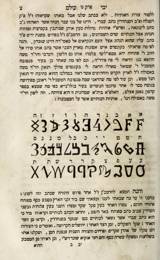
נתחיל ללמוד [II p. 179] ללמוד צורת האותיות. ולא בכתב שלנו אבל באותו שקראוהו ז"ל פ"ק דמגלה ופ"ב דסנהדרין כתב עברי,
[II p. 179] we shall begin to study the shape of the letters. Not in our own script, but in the one which [the Sages] of blessed memory, in chapter 1 of Megillah and chapter 2 of Sanhedrin, called the Hebrew script,
היינו של בני עבר הנהר אשר הארוהו ג"כ כתב ליבונאה,
that is, [the script] of the people of 'Ever ha-Nahar, which they also designated the Libona'ah script,
ופרש"י אותיות גדולות כעין אותן שכותבין בקמיעות ומזוזות הנהוג אצל הכותיים שהם השמרונים,
and Rashi explained [it as] large letters, like those written in amulets and mezuzot, which is in use among the Kutim, that is, the Samaritans.
גם הרמב"ם ז"ל בפרוש משנת ידים פ"ד כתב עליו שהוא הנהוג אצל העם הנקראים אל סאמי"רה היינו שומרון.
Maimonides of blessed memory, too, in his commentary on Mishnah Yadayim chapter 4, wrote of it that it is the [script] in use among the people called al-Sāmira, that is, Shomron.
והנה לפי מה שראיתי בקונטרס איש אמונות מארץ הצבי אשר כתב אותו מידו אל הרב ר' פתחיה ידא מספו"ליטי בלמדו אותו גם הלשון הערבי והר"ר משה הרופא בנו הראהו לי פה פירר"ה,
Now, according to what I saw in a booklet by a trustworthy man from the Land of Israel, which he wrote in his own hand for Rabbi Petaḥiah Yedidiah of Spoleto while teaching him the Arabic language as well, and which Rabbi Moses the physician, his son, showed me here in Ferrara,
וגם לפי מה שאחר כן בעיר מנטובה המשכיל ר' שמואל מארלי הראה לי בקונטרס מהלך הגאון הר"ר משה באסולה ז"ל לארץ הקדש והחדושים אשר ראה במהלכו ההוא כתיבת יד הגאון הנז' ממש,
and also according to what, afterwards, in the city of Mantua, the learned Rabbi Samuel Marli showed me in the booklet of the journey of the eminent Rabbi Moses Basola of blessed memory to the Holy Land and the novelties he saw on that journey, in the very handwriting of the said eminent [rabbi],
וכן עוד לפי מה שהראני שמה מנטובה המשכיל ר' ראובן מפירושה בנוסח מסר לו אחד מחכמי הנוצרים בעיר בולו"נייא כפי מה שמצא בספר קדמון נאמן אצלם,
and likewise according to what the learned Rabbi Reuben of Perugia showed me there in Mantua, in a version given to him by one of the Christian scholars in the city of Bologna, as he found it in an ancient book held reliable among them,
האלפ"א בית"א שמרונית זו היא צורתה. וזה לשון הר"ר משה באסולה הנז',
this Samaritan alphabet has this form. And these are the words of the said Rabbi Moses Basola:
ברכני ה' עד כה שבאתי לעכו ומצאתי שם ביד זקני הארץ מטבע כסף מפותח פתוחי חותם,
"The Lord has blessed me thus far, that I came to Acre and found there, in the hands of the elders of the land, a silver coin engraved with the engravings of a seal;
מצדו האחד כעין מקל שקד ומצדו השני כעין צלוחית ובשני הצדדין סביב כתב מפותח באר היטב,
on one side something like an almond rod, and on the other side something like a flask, and on both sides, all around, writing engraved very clearly.
והראו הכתב לכותיים וקראוהו מיד כי הוא כתב עברי אשר נשאר לכותיים כמו שנזכר בסנהדרין,
And they showed the writing to the Kutim, and they read it at once, for it is the Hebrew script that remained with the Kutim, as is mentioned in Sanhedrin.
וקראו מן הצד האחד: שקל השקלים, ומן הצד האחר:
And they read on one side: 'Shekel of shekels,' and on the other side:
ירושלים הקדושה. ואומרים כי הצורות הם מקלו של אהרן שקדים ופרחים והצורה השנית צנצנת המן,
'Jerusalem the holy.' And they say that the images are Aaron's rod with almonds and blossoms, and the second image the jar of manna.
ושקלנו אותו בשלחנות ומשקלו עשרה כסף והם חצי אוקיא שזכר רש"י,
And we weighed it at the money-changers' tables, and its weight was ten silver [pieces], which are half an ounce, as Rashi mentioned.
וכן ראיתי מן המטבע [II p. 180] ההוא בצורות ובכתיבה ההיא חצי משקלו ובו היו שוקלים חצי השקל שהיו שוקלים לקרבנות וכו'.
[II p. 180] I also saw [a specimen] of that coin, with those images and that writing, of half its weight, and with it they would weigh the half-shekel that they used to weigh for the offerings," etc.
ואולם ברוך ה' גם אני הכותב ראיתי אחד מן השקלים הנזכרים ביד אלמנת התגר החסיד יצחק האגיו כפרדי ז"ל אשר היה מתושבי פיררה ובבחר שם טוב הלך לירושלים ושם נפטר ויקבר בעמק יהושפט חוץ לשער ציון כשעור מיל,
And indeed, blessed be the Lord, I the writer have also seen one of the aforementioned shekels, in the possession of the widow of the pious merchant Isaac ha-Agiv Kafri of blessed memory, who was a resident of Ferrara and, in the prime of his good name, went to Jerusalem and died there, and was buried in the Valley of Jehoshaphat outside the Zion Gate, about a mile away.⚠1
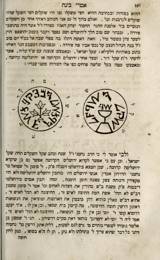
ובסביבות המטבע הנז' ראיתי כתוב באותיות דלעילא: שקל ישראל,
And around the said coin I saw written, in the letters above: "Shekel of Israel,"
ובאמצעו צנצנת עם ש"ד עליה, אשר לדעתי ר"ת שקל דוד,
and in its middle a jar with [the letters] shin dalet over it, which in my opinion is an abbreviation for "Shekel David,"⚠3
ומצד אחר: ירושלים הקדושה או ירושלימה קדושה, ובאמצעו מטה בעל שלשה פרחים כפי אלו הצורות משני עבריו:
and on the other side: "Jerusalem the holy" or "Yerushalayimah qedoshah," and in its middle a rod with three blossoms, according to these images of its two sides:
ולבי אומר לי כי הרב נחמני ז"ל שכח וכתב שקל השקלים תחת שקל ישראל.
And my heart tells me that Rabbi [Moses] ben Naḥman of blessed memory forgot, and wrote "Shekel of shekels" instead of "Shekel of Israel."
וכן עם כי אפשר לקרוא ירושלים הקדושה אפשר גם כן שיקרא ירושלימה קדושה,
Likewise, though it is possible to read "Jerusalem the holy," it is also possible to read "Yerushalayimah qedoshah,"
שכן המצא בירושלמי דמגלה פ"ק, ר' סימון ור' שמואל בר נחמני תרויהון אמרין אנשי ירושלים היו כותבין ירושלים ירושלימה ולא היו מקפידין ודכותה צפון צפונה תימן תימנה.
for so it is found in the Jerusalem Talmud, Megillah chapter 1: "Rabbi Simon and Rabbi Samuel bar Naḥmani both say: The people of Jerusalem used to write Yerushalayim [and] Yerushalaymah and were not particular; and likewise Ṣafon, Ṣafonah; Teiman, Teimanah."
ומזה תבין אמרם בירושלמי דיבמות פ"ק משנת ב"ש מתירין את הצרות לאחים וכו' אמר ר' סימון טעמון דב"ש לא תהי' אשת המת החוצה לאיש זר,
And from this you will understand what they said in the Jerusalem Talmud, Yevamot chapter 1, on the mishnah "Beit Shammai permit the co-wives to the brothers," etc.: "Rabbi Simon said: The reason of Beit Shammai is 'The wife of the dead man shall not be [married] outside (ha-ḥuṣah) to a stranger' [Deut 25:5]:
החיצונה לא תהי' לאיש זר, אתיא דב"ש כאלין כותיא דהן מיבמין את הארוסות ומוציאין את הנשואות דאינון דרשין חוצה החיצונה,
the outer one (ha-ḥiṣonah) shall not be [married] to a stranger. Beit Shammai turn out to be like these Kutim, who perform levirate marriage with the betrothed and release the married, for they expound ḥuṣah [as] ḥiṣonah.
מה קיימין בית שמאי, ובן אין לו, א"ר יעקב דרומיא קומי ר' יוסי ובן אין לו מן הנשואה,
How do Beit Shammai uphold 'and has no son'? Rabbi Jacob of the South said before Rabbi Yose: 'And has no son' — from the married one;
תני ר' שמעון בן אלעזר נומיתי לסופרי כותיים מי גרם לכם לטעות,
Rabbi Simeon ben Eleazar taught: I said to the scribes of the Kutim: What caused you to err?
דלית אתון דרשין כר' נחמיה דתני כל דבר שהוא צריך ל' בתחלתו ולא נתן,
[It is] that you do not expound like Rabbi Neḥemiah, who taught: Any word that requires a lamed at its beginning and was not given [one],
תן לו ה"א בסופו, כגון לחוץ חוצה [II p. 181] חוצה,
[II p. 181] give it a he at its end, as in la-ḥuṣ — ḥuṣah;
לשעיר שעירה, לסוכות סוכותה, מתיבין לר' נחמיה ישובו רשעים לשאולה,
le-Se'ir — Se'irah; le-Sukkot — Sukkotah. They objected to Rabbi Neḥemiah: 'The wicked shall return to She'olah' [Ps 9:18]!
לדיוטא התחתונה של שאול ע"כ, וסיפא זו היא ג"כ במדרש תהלים פסוק ישובו רשעים הנז'.
[Answer:] to the lowest storey of She'ol" — end [of quotation]. And this conclusion is also in Midrash Tehillim on the said verse "The wicked shall return."
והכלל הוא שהכותיים אינם מודים שה"א בסוף תיבה במקום למ"ד בתחלתה,
The upshot is that the Kutim do not admit that a he at the end of a word stands in place of a lamed at its beginning,
ולזה יפרשו החוצה החיצונה, ובכן ב"ש נראין דורשין כמותם,
and therefore they interpret ha-ḥuṣah as ha-ḥiṣonah; and so Beit Shammai appear to expound as they do.
וא"ר יוסי לר' יעקב הנז' אל יחסדונך כותאי ר"ל לא יקללוך הכותיים,
And Rabbi Yose said to the said Rabbi Jacob, "Al yeḥasdunakh Kuta'ei," that is, may the Kutim not curse you,
כי כן מצאתי כתוב בפנקס ארץ הצבי הנז' איך ברצותם לומר קללה עליו יאמרו חסדא עליהו,
for so I found written in the said notebook from the Land of Israel, that when they wish to say a curse upon him they say "ḥisda upon him."
וכן מצורת האותיות האלה תבין מאמר אחד עקרי אשר בירושלמי דמגלה פ"ק והוא אמר ר' לוי מאן דאמר ברעץ נתנה תורה עי"ן מעשה נסים,
Likewise from the shape of these letters you will understand a fundamental saying in the Jerusalem Talmud, Megillah chapter 1, namely: "Rabbi Levi said: According to the one who says the Torah was given in Ra'aṣ, the 'ayin was a miraculous work;
מאן דאמר אשורי נתנה תורה סמ"ך מעשה נסים.
according to the one who says the Torah was given in Ashuri, the samekh was a miraculous work."
כי בתוספתא דסנהדרין פ"ד ופ"ק דמגלה ופ"ב דסנהדרין בגמרא דילן ופ"ק דמגלה בירו' נחלקו התנאים על האותיות שבהן נתנה תורה מסיני כמו שנזכור ג"כ בפרק נ"ח,
For in the Tosefta, Sanhedrin chapter 4, and in Megillah chapter 1 and Sanhedrin chapter 2 in our Gemara, and Megillah chapter 1 in the Jerusalem [Talmud], the tannaim disputed the letters in which the Torah was given at Sinai, as we shall also mention in chapter 58:
ר' יוסי ור' נתן אמרו שהיה כתב זה של עבר הנהר,
Rabbi Yose and Rabbi Nathan said that it was this script of 'Ever ha-Nahar,
ור' שמעון בן אלעזר ור' אלעזר בן פרטא ור' אליעזר המודעי ור',
and Rabbi Simeon ben Eleazar, Rabbi Eleazar ben Perata, Rabbi Eliezer ha-Moda'i and Rabbi,⚠4
אשר סוגין דעלמא כותיהו, אמרו שהיה כתב אשורי.
according to whom the generality [of opinion] holds, said that it was the Ashurit script.
ובכן א"ר לוי כי למאן דאמר אשורי נתנה תורה סמ"ך מעשה נסים והרמז למאמר רב חסדא בגמרא דידן מ"ם וסמ"ך שבלוחות בנס היו עומדין,
And so Rabbi Levi said that according to the one who says the Torah was given in Ashuri, the samekh was a miraculous work; and the allusion is to Rav Ḥisda's saying in our Gemara: "The mem and samekh in the Tablets stood by a miracle,"
מהיות דעתם ז"ל שהכונה באמרו מזה ומזה הם כתובים שהיו האותיות עוברות מצד אל צד,
since their view, of blessed memory, was that the meaning of "on the one side and on the other they were written" [Exod 32:15] is that the letters passed through from side to side.
ולדעתם זה יתישב מה שאמרו למה נקרא שמו אשורי שהוא מאושר באותיותיו כדבר הבבלי,
And on this view what they said is well settled: "Why is it called Ashuri? Because it is me'ushar (straight/praised) in its letters," as the Babylonian [Talmud] says,
ומאן דאמר ברעץ (שהוא בהכרח כתב עבר הנהר הנזכר) עי"ן היא מעשה נסים,
And according to the one who says [it was given] in Ra'aṣ (which is necessarily the aforementioned script of 'Ever ha-Nahar), the 'ayin was a miraculous work,
שכן ראית אותה היקף שלם כצורת הסמ"ך אצלנו.
for you have seen it as a complete enclosure, like the shape of our samekh.
ואל הדעת הזה יאות הטעם האחר שאמרו שם למה נקרא אשורי שעלה עמהם מאשור,
And with this view the other reason they gave there accords: "Why is it called Ashuri? Because it came up with them from Assyria,"
כמו שאמרו ג"כ בירושלמי דר"ה כי שמות המלאכים והחדשים עלו עמהם מבבל.
just as they also said in the Jerusalem [Talmud] of Rosh ha-Shanah that the names of the angels and of the months came up with them from Babylonia.
ומה שתראה בירושלמי דמגלה פ"ק. אשורי יש לו כתב ואין לו לשון,
As for what you see in the Jerusalem [Talmud], Megillah chapter 1: "Ashuri has a script but has no language;
עברי יש לו לשון ואין לו כתב בחרו להם כתב אשורי ולשון עברי,
Hebrew has a language but has no script; they chose for themselves the Ashuri script and the Hebrew language" —
אין ספק כי כונתם באין לו היא שאינו משובח,
there is no doubt that by "has no" they mean that it is not praiseworthy,
אמרינן במגלה והכרתי לבבל שם ושאר שם זה לשון,
"We say in Megillah: 'And I will cut off from Babylon name and remnant' [Isa 14:22] — 'name' is script, 'remnant' is language.
ומאי קאמר דהא לשון ארמי הם מספרים ועודם משתמשין בו,
But what does it mean, seeing that they speak the Aramaic language and still use it?
אלא ודאי לשון מלכות קאמר עכ"ד. והנה תמצא לבעל הערוך שפרש מלת רעץ מהופכת כמו בצער,
Rather it certainly means the language of royalty" — end of their words. Now you will find that the author of the Arukh explained the word ra'aṣ as inverted, like be-ṣa'ar (in distress),
או גרסינן ברעץ לשון דעיצה ודוחק שהוא כמו כן ענין צער,
or we read be-ra'aṣ in the sense of crushing and pressure, which is likewise a matter of distress.
אך לכל הפנים נכרין הדברים שהכונה באמרו ברעץ היא בכתב עבר הנהר,
But in any case it is evident that the meaning of be-ra'aṣ is the script of 'Ever ha-Nahar.
ואמרם פ"ב דסנהדרין נהפך להם לרועץ שהוא לפרוש רש"י מענין תרעץ אויב,
And their saying in chapter 2 of Sanhedrin, "it was turned for them into ro'eṣ," which according to Rashi's explanation is from the sense of "[Your right hand] shatters (tir'aṣ) the enemy" [Exod 15:6],
הכונה בו שהוא הפך [II p. 182] האשורי אשר תומכיו יאושרו,
[II p. 182] means that it is the opposite of the Ashuri, whose supporters are made happy (ye'ushshar),
ואין ספק כי נטיית הר"י אלבו מאמר ג' פי"ו מספר עקריו,
And there is no doubt that the inclination of Rabbi Joseph Albo, Discourse 3, chapter 16 of his Sefer ha-Ikkarim,⚠6
אל שהתורה נתנה בכתב עבר הנהר היא אפס ותהו,
toward [the view] that the Torah was given in the script of 'Ever ha-Nahar is naught and void,
ודעת החכמים אשר עוד נזכיר בפנ"ח שנתנה באשורי הוא יזכר על טוב לנצח.
while the view of the Sages, which we shall mention further in chapter 58, that it was given in Ashuri, shall be remembered for good forever.
— ולענין זה לא אחדל מהודיעך כי הר"ר משה אלאשקר בתשובותיו סימן ע"ד כתב וז"ל:
— And on this matter I will not refrain from informing you that Rabbi Moses Alashkar wrote in his Responsa, no. 74, as follows:
דע שבאו לידי מאותן המטבעות מכמה מינים משונים שקל ומחצית השקל,
"Know that there came into my hands some of those coins, of several different kinds, shekel and half-shekel;
ויש מהם שכתוב בם שנת כך לנחמת ציון,
and some of them have written on them 'Year such-and-such of the consolation of Zion,'
שנת כך למלך פלוני, וראיתי באחד צורת לולב אגוד ואתרוג בצדו,
'Year such-and-such of King so-and-so'; and I saw on one the image of a bound lulav with an etrog beside it.
ואמר לי יהודי אחד בקי באותו הכתב כי מהצד האחד היה כתוב יוני עם האר"מה של יונים חקוקה בו,
And a Jew expert in that script told me that on one side it was written in Greek, with the arms of the Greeks engraved on it,
וצורת האותיות אשר הביא בעל ספר מקנה אברם בראשיתו ודאי הוא שאינן האותיות אשר על השקל דלעילא.
And the shape of the letters that the author of Sefer Miqneh Avram brought at its beginning — it is certain that they are not the letters on the above-mentioned shekel.
ועוד לענין זה אזכירך כי רש"י בפרוש הכתוב כסף שלשים שקלים אמר וז"ל,
Further on this matter, let me remind you that Rashi, in explaining the verse "thirty shekels of silver" [Exod 21:32], said as follows:
השקל משקלו ד' זהובים שהם חצי אוקיא, עם כי בתחלת פרשת תשא כתב זוזים במקום זהובים.
"The shekel weighs four gold pieces (zehuvim), which are half an ounce" — although at the beginning of Parashat Ki Tissa he wrote zuzim in place of zehuvim.
וידידיה האלכס' בספרו הראשון מן התורות הפרטיות לענין מצות הנערכין כתב וז"ל,
And Philo of Alexandria, in his first book of The Special Laws, on the commandment of valuations, wrote as follows:
השקל הוא ארבעה כספים. והיוסיפון בקדמוניות פ"ט ספר ג' כתב וז"ל,
"The shekel is four silver pieces." And Josephus in the Antiquities, chapter 9, book 3, wrote as follows:⚠7
השקל ליהודים הוא ד' דרכמוני אטיני. ולדעתי דרכמונים שש רבואות דעזרא ב' ואדרכונים אלף דעזרא ח' הם מן הדרכמונים הנזכרים,
"The shekel of the Jews is four Attic drachmas." And in my opinion the "sixty thousand darkemonim" of Ezra 2 and the "thousand adarkonim" of Ezra 8 are [the same as] the aforementioned drachmas,
וזהובים וזוזים וכספים ודרכמונים ואדרכונים היו כלם דבר אחד.
and zehuvim, zuzim, silver pieces, darkemonim and adarkonim were all one thing.
והחי אשר יתן אל לבו לדעת בדיוק כל המשקלים דאוריתא ודרבנן,
And the living man who sets his heart to know precisely all the weights, biblical and rabbinic,
וכן כל השיעורים למיניהם ביבש ובלח יבקש לו ספר כפתור ופרח פרק ט"ז כי הרבה לדקדק ולפרש אותם לפי כל הדעות שנמצאו.
and likewise all the measures of their kinds, dry and liquid, let him seek out the book Kaftor va-Feraḥ, chapter 16, for it examined and explained them in great detail according to all the views found. 